

You’re at a networking event. You’ve been there for fifteen minutes, and you’ve already had three conversations that went exactly the same way.
“So, what do you do?”
“Oh, that’s interesting. How long have you been doing that?”
“Crazy weather we’re having, right?”
“So, where are you from originally?”
Each conversation lasts about two minutes. Each one feels like you’re reading from a script. Each one leaves you feeling emptier than the last.
You’re not being rude. You’re smiling, nodding, asking the right questions. But inside, you’re counting down the minutes until you can leave. Your brain feels like it’s running a marathon while standing still.
If this sounds familiar, you’re not alone. Here’s why small talk feels exhausting to introverts — and why it’s not your fault.
What Small Talk Actually Asks of You
Small talk might seem simple, but it’s actually a complex cognitive and emotional task.
It Requires Constant Performance
Small talk demands that you:
- Maintain appropriate facial expressions
- Manage your body language
- Think of appropriate responses quickly
- Ask the right follow-up questions
- Gauge the other person’s interest
- Keep the conversation flowing
All of this happens while you’re also managing your internal state — monitoring your own energy, fighting the urge to check your phone, and trying not to look as bored as you feel.
For introverts, this is exhausting. It’s a performance with very little payoff.

The Lack of Meaningful Payoff
Here’s the core problem for introverts: small talk offers low reward for high effort.
What Introverts Want from Conversation
Introverts typically crave:
- Depth and meaning
- Authentic connection
- Understanding and being understood
- Intellectual or emotional engagement
- Something that makes them think or feel
What Small Talk Offers
Small talk typically offers:
- Surface-level exchange
- Social ritual without substance
- Information you won’t remember
- No real connection
- Nothing to think about afterward
For an introvert, small talk is like eating cardboard. It fills the time but provides no nourishment.
The effort they put in isn’t matched by any meaningful return. And that’s draining in itself.

The Energy Cost of Inauthenticity
So why does small talk feel so exhausting to introverts? It comes down to energy, authenticity, and how their brains are wired.
Introverts tend to value authenticity. They want to be genuine and they want others to be genuine with them.
Small talk is inherently inauthentic. It’s a social script — a ritual performed because it’s expected, not because it’s meaningful.
For introverts, performing inauthenticity is costly.
The Cognitive Load
When you’re pretending to be more interested than you are, your brain is working harder.
You monitor your own performance
You try to appear engaged
You suppress your natural desire to leave
You force enthusiasm you don’t feel
This is called emotional labor, and it’s exhausting. Introverts are already expending energy just to be in a social situation. Adding performance on top of that is too much.

Why Introverts Process Differently
Remember the science from earlier? It applies here too.
High Baseline Arousal
Introverts have higher baseline arousal. Their brains are already processing a lot of information.
Small talk adds stimulation without adding meaning. The introvert’s brain is still working hard, but it’s not getting anything valuable in return. It’s like being forced to run on a treadmill that goes nowhere.
Sensitivity to Stimulation
Introverts are more sensitive to external stimulation. Every element of small talk — the noise, the eye contact, the need to respond quickly — adds to the overload.
After a few minutes of small talk, the introvert’s nervous system is already overwhelmed. And they’re only getting started.
The Relationship Between Small Talk and Connection
Here’s the frustrating part: introverts do want to connect with others.
They just don’t want to do it through small talk.
Small Talk as a Gateway
Small talk is often described as a gateway to deeper conversation. You start with surface-level topics and gradually move to more meaningful ones.
For many introverts, this feels backwards.
They’d rather skip the gateway entirely and go straight to the meaningful part. Why spend fifteen minutes talking about the weather when we could be discussing something that actually matters?
The Paradox
The paradox is that introverts often need deeper conversation to feel energized. But to get to deeper conversation, they often have to endure the small talk first.
This is why introverts often feel drained before the meaningful part even begins. They’ve already spent their energy on the gateway.

Why Extroverts Handle It Differently
Extroverts experience small talk completely differently.
Energy from Interaction
For extroverts, any social interaction provides energy — even shallow ones. Small talk is still social. It still provides stimulation. It still feels rewarding.
Lower Sensitivity
Extroverts have lower baseline arousal. Small talk brings them up to an optimal stimulation level, rather than pushing them over it.
Different Reward System
Extroverts are more sensitive to dopamine. Even surface-level social rewards feel good. Small talk provides a small hit of dopamine — enough to make it worthwhile.
This is why extroverts can chat about the weather for twenty minutes and feel great. Their brains are wired to find it rewarding.
What Small Talk Feels Like to an Introvert
Let’s be specific about the experience.
The Mental Checklist
During small talk, an introvert’s brain is running a constant checklist:
Am I smiling enough?
Did I ask a follow-up question?
Is it my turn to speak?
Did I just repeat myself?
How long have we been talking?
Can I leave yet?
The Physical Exhaustion
Small talk can cause physical symptoms in introverts:
- Fatigue
- Headaches
- Dry mouth
- Tension in shoulders and neck
- The urge to escape
- The Emotional Drain
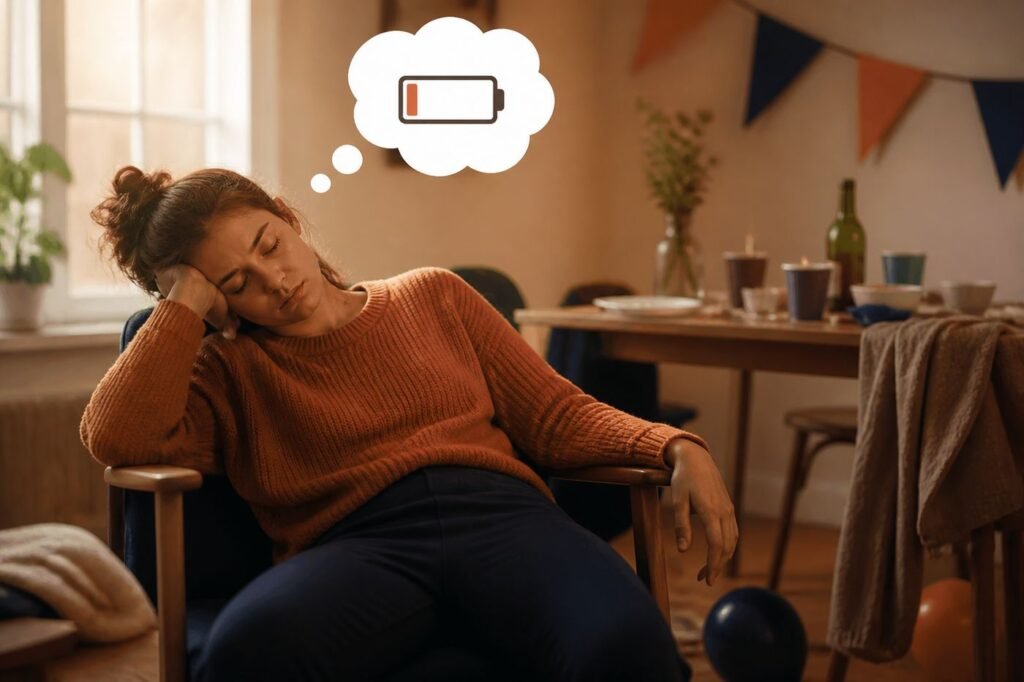
- After prolonged small talk, introverts often feel:
- Empty
- Disconnected
- Irritated
- Guilty for feeling irritated
- Depleted
Why Small Talk Feels Especially Bad When It’s Expected
There’s another layer to the exhaustion: small talk is often expected.
Obligation and Performance
When small talk is required — at work, at family gatherings, at networking events — it feels like an obligation. You have to do it, even when you don’t want to.
This makes it feel even more draining. You’re not choosing to engage. You’re performing because you have to.
The Fear of Being Rude
Introverts often worry that avoiding small talk makes them seem rude or unfriendly. So they push through the exhaustion, smiling and nodding, while their internal battery drains faster than they can manage.
It’s a no-win situation: engage and feel exhausted, or disengage and feel guilty.
Now that we understand why small talk feels exhausting to introverts, let’s look at what they actually want instead
What Introverts Want Instead
If small talk is exhausting, what do introverts actually want?
Deep Conversation
Introverts crave conversations that go somewhere. Topics that matter. Discussions that reveal something about the other person or the world.
Silent Presence
Sometimes introverts don’t want to talk at all. They want to be with someone in comfortable silence — sharing space without the pressure to perform.
Authentic Connection
Introverts want to connect with people in genuine ways. They want to be seen and understood. They want relationships that feel real.
A Way Out
Introverts also want permission to leave. They want to say “I’m done with socializing for now” without having to explain or apologize.

How Introverts Can Navigate Small Talk
Small talk isn’t going away. Here’s how to make it more bearable.
1. Shift the Conversation
Try to move small talk toward something more meaningful. Ask questions that invite a real answer:
“What’s been on your mind lately?”
“What are you looking forward to these days?”
“What’s something interesting you’ve learned recently?”
“What’s your favorite thing about what you do?”
2. Set a Time Limit
Give yourself permission to disengage after a reasonable time. “It was great talking to you — I’m going to grab another drink” or “I need to check in with someone else” are perfectly acceptable exits.
3. Prepare Conversation Starters
If small talk is inevitable, prepare a few topics that you actually find interesting. Having a go-to question or observation can make the interaction feel less painful.
4. Find the Introverts
At social events, look for other introverts. They’re often standing at the edges, looking slightly uncomfortable. Connect with them. They’ll probably appreciate the conversation more than the extroverts anyway.
5. Give Yourself Permission
Permission to:
- Leave early
- Take breaks
- Say no to invitations
- Be quiet
- Not be the life of the party

How to Support an Introvert with Small Talk
If you’re not an introvert, here’s how to make small talk less painful for the introverts in your life.
Skip the Script
Don’t just ask the usual questions. Ask something that invites a real response. Show genuine curiosity about who they are.
Give Them a Way Out
If you’re at a gathering and an introvert looks overwhelmed, offer them an exit: “I’m going to get some air — want to come?” or “I need to find a quiet spot for a minute.”
Don’t Take It Personally
If an introvert declines an invitation or seems quiet, it’s not about you. They’re not rejecting you — they’re managing their energy.
Connect on Their Terms
Introverts often communicate better in writing or in one-on-one settings. Meet them where they’re comfortable.
Rirely Humor Moment
Introvert translation:
“I don’t do small talk” = “Please don’t ask me about the weather. I will dissolve into a puddle of awkwardness.”
Small talk to an introvert is like trying to fill a swimming pool with a teaspoon. It takes forever, achieves nothing, and everyone ends up frustrated.
Introvert at a party: “I’m having a lovely time.”Also introvert at a party: “I have asked three people about their jobs and I am now ready to go home and lie in a dark room.”
Introverts don’t hate conversations. They just hate the part where you have to talk about things you don’t care about with people you don’t know while pretending to be interested.
Frequently Asked Questions
Is it normal to hate small talk as an introvert?
Yes. Many introverts find small talk draining because it lacks meaning and demands social performance without offering much reward.
Can I avoid small talk altogether?
Not completely. Small talk is a social convention that’s often expected in workplaces, social events, and new relationships. But you can minimize it and shift conversations toward deeper topics.
Why does small talk exhaust me even when it’s with people I like?
Even with people you like, small talk requires effort. It’s still a performance. And if you’re introverted, the effort costs you energy.
How can I make small talk less draining?
Try to move the conversation toward topics that interest you. Set time limits. Give yourself permission to leave. Prepare a few conversation topics in advance.
Is small talk really necessary?
It serves a social purpose — it’s a way to establish rapport and navigate social situations. But the depth and duration of small talk can vary. You don’t have to engage in it for long periods.
What’s the difference between small talk and a real conversation?
Small talk is surface-level and scripted. Real conversation is meaningful, personal, and often reveals something about the people involved. Introverts typically crave the latter.
Summary
Small talk feels exhausting to introverts because:
In short, small talk feels exhausting to introverts because it demands performance without offering meaningful payoff
It requires constant cognitive effort — smiling, nodding, finding questions
Introverts have higher baseline arousal, so external stimulation adds up quickly
Small talk is inauthentic, and introverts value authenticity
It drains energy that could be spent on deeper, more meaningful connection
For introverts, small talk is like running in place. It uses energy but doesn’t get you anywhere.
The good news is that you don’t have to be good at small talk to be good at socializing. You just need to find the kind of conversation that actually energizes you — and give yourself permission to skip the rest.
You’re not broken for hating small talk. You’re just wired for depth.
The Complete Guide to Introverts — The foundation for understanding introversion.
15 Signs You’re an Introvert — Check your own experiences against common signs.
Introvert vs. Extrovert: What’s the Real Difference? — A deeper look at the personality spectrum.
Why Do Introverts Need Alone Time? — The science behind your social battery.
Are You an Introvert or Just Shy? Here’s the Difference — Understanding the crucial distinction.
Express Yourself
If small talk drains you, wear it proudly.
Rirely’s collection includes designs that say what you can’t always say:
“Social Battery: Low” — For when you’ve had enough.
“Mentally Somewhere Else” — For the introvert who’s present but processing.
“Professional Overthinker” — For the mind that never stops.
Find the design that expresses your personality.
Explore More with Rirely
Want more personality insights, relatable observations, and the occasional painfully accurate take? Join the Rirely newsletter.
It’s free. It’s not spammy. And it might just help you discover something new about yourself.
Discover yourself. Express yourself.