

You’re at a gathering. There’s a person you’ve met once or twice before — someone who seems interesting. You’d like to get to know them better. Maybe even become friends.
But how?
You can’t just walk up and say, “Hey, want to be friends?” That’s not how it works. And the idea of striking up a casual conversation in a crowded room feels exhausting before you’ve even started.
So you stand there, holding your drink, watching them from across the room, and telling yourself you’ll say something later.
Later never comes.
If you’re an introvert, this is a familiar scene. Making friends doesn’t come naturally to everyone, and for introverts, the process can feel especially daunting. Not because you don’t want connection — you do. But because the way friendships are typically formed often favors people who thrive on spontaneity, small talk, and large groups.
The good news? Introverts make incredible friends. And there are ways to build meaningful connections that don’t require you to become someone you’re not.
Why Making Friends Is Harder for Introverts
Let’s start with why this feels so difficult.
The System Favors Extroverts
Most social environments — parties, networking events, group activities — are designed for extroverts. They reward people who speak up, initiate conversations, and thrive in high-energy settings.
If you’re an introvert, you might feel like you’re playing a game with rules designed for someone else.
Small Talk Feels Like a Wall
For many introverts, small talk isn’t a bridge to deeper connection — it’s an obstacle. It feels shallow, forced, and draining. And it’s often the only way to “officially” start a friendship in social settings.
Your Energy Is Limited
You can’t spend hours “working the room.” You have a limited social battery, and you need to spend it wisely. That can make the whole process feel high-stakes.
You Overthink Everything
You might worry about saying the wrong thing, being too quiet, or seeming uninterested. You replay conversations afterward, wondering if you came across well. The mental load of socializing is heavier for introverts.

What Introverts Bring to Friendships
Before we get into the “how,” let’s talk about the “why you’re actually great at this.”
Introverts make fantastic friends. Here’s why:
- You listen. Really listen. Not just waiting for your turn to talk.
- You go deep. You want to know people — not just their names and jobs, but their thoughts, feelings, and stories.
- You’re loyal. You don’t collect friends. You invest in them.
- You’re thoughtful. You remember details. You check in. You notice when something’s off.
- You’re low-drama. You value peace, calm, and genuine connection over social performance.
The right people will appreciate these qualities. The key is finding them — and building the connection in ways that work for you.
The Introvert’s Friendship Strategy
Here’s a practical, step-by-step approach to making friends as an introvert.
1. Start With Proximity
Friendships often begin with proximity — seeing the same people regularly.
Instead of trying to meet people at big events, look for environments where you’ll naturally cross paths with the same people over time:
- A class or workshop
- A hobby group or club
- A volunteer organization
- A weekly meetup
- A book club
- A fitness class
Repeated contact gives you time to build familiarity without the pressure of a “networking” situation.

2. Look for “Your People”
You don’t need to be friends with everyone. You need to find people who share your values, interests, and energy style.
What are you into? What do you care about? Where do people like you hang out?
- Love reading? Join a book club.
- Into gaming? Find a local or online gaming community.
- Care about a cause? Volunteer for it.
- Enjoy creative work? Take an art class.
When you’re in an environment that aligns with your interests, conversation flows more naturally — and you don’t have to force it.
3. Use the “Repeated Contact” Advantage
Here’s an important truth: most friendships don’t start with a single great conversation. They start with repeated contact.
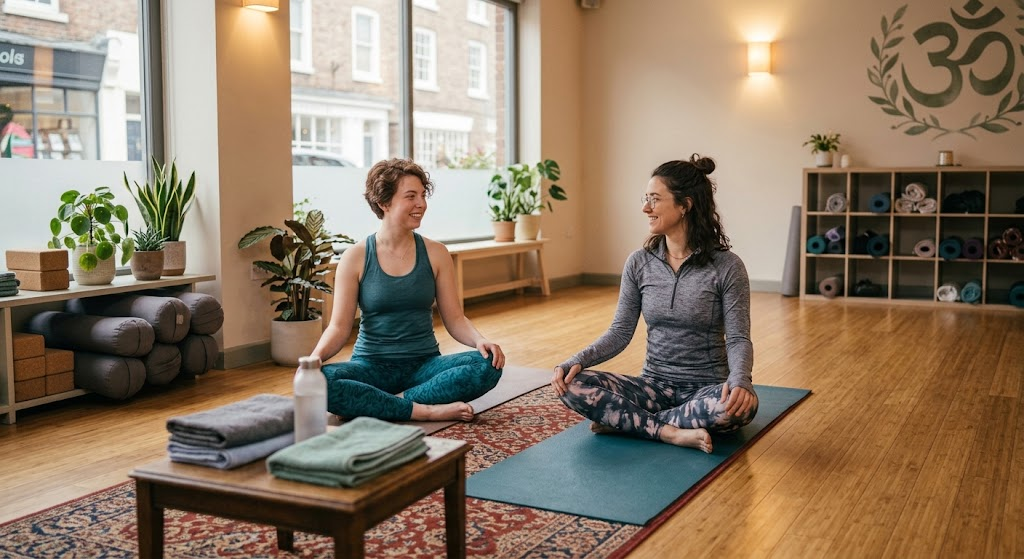
That person you see every week at yoga? The one you nod to at the coffee shop? The one who sits near you in class?
Those small, repeated interactions build familiarity. And familiarity is the foundation of friendship.
So don’t put pressure on the first conversation. Focus on being present, being friendly, and letting things develop naturally.
4. Ask Questions That Go Beyond Small Talk
Small talk is draining. But you don’t have to stay in it forever.
When you’re ready to go deeper, ask questions that invite real answers:
- “What do you love about that?”
- “How did you get into that?”
- “What’s something you’re excited about right now?”
- “What’s been on your mind lately?”
These questions skip the surface and invite genuine conversation. Most people will appreciate the chance to talk about something real.
5. Use the “One Good Conversation” Rule
You don’t need to “work the room.” You don’t need to meet ten people. You just need one good conversation.
At any social event, your goal is simple: have one meaningful conversation with one person. That’s it. That’s success.
If you do that, you’ve made progress. And the pressure drops dramatically.

6. Suggest a Specific Follow-Up
If you had a good conversation with someone, don’t leave it at “We should hang out sometime.” That’s vague. It rarely happens.
Instead, suggest something specific:
- “I’m going to that bookshop on Saturday — want to come?”
- “There’s a coffee place I’ve been wanting to try. Want to grab a cup sometime?”
- “I’m thinking of checking out that new exhibit. Would you be into that?”
Specific invitations are easier to say yes to. And they show you’re genuinely interested.
7. Let Friendships Develop Slowly
Introverts often prefer slow-building friendships. That’s a strength, not a weakness.
You don’t need to be best friends after one conversation. You don’t need to text every day. You don’t need to rush intimacy.
Let the friendship grow at its own pace. Let trust build over time. Let the connection deepen naturally.
This is how introverts make the best friendships — the kind that last.

Where to Meet People as an Introvert
Here are some introvert-friendly places to meet potential friends:
In-Person
- Bookstores and libraries — Quiet, calm, and full of people who like quiet, calm things
- Coffee shops — Low-pressure, familiar, and easy to have a quick chat
- Hobby groups — Shared interests make conversation easier
- Volunteer organizations — Meaningful work attracts meaningful people
- Classes and workshops — Learning environments are structured and low-pressure
- Hiking and walking groups — Side-by-side activity reduces the pressure of eye contact
Online
- Interest-based forums and communities — Reddit, Discord, and niche websites
- Social media groups — Local groups or hobby-specific communities
- Apps designed for friendship — Bumble BFF, Meetup, etc.
The key is choosing environments where conversation feels natural, not forced.

What to Do When It Feels Awkward
Let’s be honest: making friends can feel awkward. Especially for introverts.
Here’s how to handle it:
If You Don’t Know What to Say
Ask a question. People love talking about themselves. And listening is your superpower anyway.
If You Feel Awkward
Remember that most people feel awkward too. You’re not alone. And a little awkwardness is normal — it doesn’t mean you’re failing.
If the Conversation Stalls
It’s okay. Not every conversation has to be amazing. You can simply say, “It was great talking to you,” and move on. You’ll have another chance.
If You Feel Drained
Take a break. Go to the bathroom. Step outside. Give yourself permission to recharge before diving back in.

Rirely Humor Moment
Introvert friendship goals: one person you can sit in silence with and not feel weird about it.
How introverts make friends:
- Step 1: See the same person repeatedly.
- Step 2: Exchange polite nods for three weeks.
- Step 3: Finally say “Hey” one day.
- Step 4: Now you’re friends. Congratulations.
Introvert at a party: “I made one friend. That’s enough socializing for the entire month.”
The introvert’s guide to friendship: I don’t need a lot of friends. I just need the ones I have to understand why I disappear for two weeks and then come back like nothing happened.
Frequently Asked Questions
How do introverts make friends as adults?
Introverts make friends by finding environments where they see the same people regularly, focusing on one meaningful conversation at a time, and letting friendships develop slowly.
Is it harder for introverts to make friends?
It can be, because many social environments favor extroverted behavior. But introverts can build deep, lasting friendships by choosing the right environments and approaches.
How do I start a conversation as an introvert?
Ask a question. Show genuine curiosity. Start with something simple and let the conversation develop naturally. You don’t need to be witty or impressive — just present and interested.
Should I tell people I’m introverted?
If it feels relevant and comfortable, yes. It helps people understand your communication style and energy needs. A simple “I’m an introvert, so I sometimes need to recharge” can prevent misunderstandings.
How do I maintain friendships as an introvert?
Quality over quantity. Be consistent in your own way. Reach out when you have energy. Be honest about your needs. And show up for the people who matter.
What if I’m too tired to socialize?
Honor your limits. Rest when you need to. But also recognize that isolation can make loneliness worse. Balance is key.
Summary
Making friends as an introvert isn’t about becoming more extroverted. It’s about building connections in a way that works for your energy and personality.
- Start with proximity — find environments where you’ll see the same people regularly
- Look for “your people” — people who share your interests and values
- Use repeated contact to build familiarity
- Go beyond small talk with real questions
- Aim for one good conversation, not a room full of them
- Suggest specific follow-ups
- Let friendships develop slowly and naturally
You don’t need to be the life of the party. You just need to be present, genuine, and open to connection.
The right people will appreciate you for exactly who you are.
Continue Exploring
- The Complete Guide to Introverts — The foundation for understanding introversion.
- Do Introverts Get Lonely? — Because even introverts need connection.
- Why Do Introverts Take So Long to Reply to Texts? — Understanding introvert communication.
- 10 Things Introverts Wish Extroverts Understood — A guide for the people who don’t quite get it.
- Why Do Introverts Need Alone Time? — The science behind your social battery.
Express Yourself
If you’re an introvert who values deep connection over small talk, Rirely’s collection helps you express it:
- “Social Battery: Low” — For when you need people to know you’re running on empty.
- “Professional Overthinker” — For the introvert whose mind never stops.
- “Mentally Somewhere Else” — For the introvert who’s present but also deeply internal.
- “Do Not Disturb: Recharging” — A clear signal for your quiet time.
Find the design that matches your personality.
Explore More with Rirely
Want more personality insights, relatable observations, and the occasional painfully accurate take? Join the Rirely newsletter.
It’s free. It’s not spammy. And it might just help you discover something new about yourself.
Discover yourself. Express yourself.