

You’re at a party. The music is good. The people are nice. You’ve had perfectly pleasant conversations with several of them. And yet, about forty-five minutes in, you find yourself calculating the earliest possible moment you can leave without appearing rude.
It’s not that you’re not having fun. You are. But somewhere beneath the surface, a quiet alarm is going off. Your brain feels foggy. Your smile requires more effort than it did thirty minutes ago. You start mentally rehearsing your exit strategy: “I have an early morning” or “I forgot I need to feed the cat.”
If this feels painfully familiar, you might be an introvert.
And no, that doesn’t mean you’re shy, antisocial, or broken. It means your brain is wired differently — and understanding how it works might just change how you see yourself entirely.
I have put together the complete guide to introverts: What Is an Introvert, Really?
At its simplest, introversion is a personality trait characterized by a preference for quieter, less stimulating environments and a tendency to feel drained after prolonged social interaction.
But that definition doesn’t quite capture what the introvert personality feels like.
A better way to understand introversion is this: Introverts draw energy from within themselves, while extroverts draw energy from the outside world.
For an introvert, socializing is like spending money from a bank account. Every conversation, every group setting, every moment of external stimulation makes a withdrawal. Eventually, the account runs low and needs to be replenished — usually through solitude, quiet activities, or time with a very small circle of trusted people.
This isn’t a choice or a character flaw. It’s a fundamental difference in how the nervous system responds to stimulation.

The Quick Answer: What Makes an Introvert Different?
Aspect
Introverts Typically…
Extroverts Typically…
=>Energy
- Feel drained after socializing; recharge alone
- Feel energized by socializing; feel drained alone
=>Thinking
- Process thoughts internally before speaking
- Process thoughts externally through talking
=>Stimulation
- Prefer lower-stimulation environments
- Seek out higher-stimulation environments
=>Social Circle
- Prefer a few deep connections
- Enjoy a wider network of acquaintances
=>Conversation
- Prefer deep, meaningful topics
- Enjoy a mix of light and deep conversation
Where Does Introversion Come From?
The short answer: a lot of it is biological.
Research suggests that introversion and extroversion have a strong genetic component. But it’s not just about DNA — it’s about how your brain actually works.
The Brain Chemistry Difference
One of the most widely discussed theories comes from psychologist Hans Eysenck, who proposed that introverts and extroverts have different baseline levels of cortical arousal.
Introverts have naturally higher baseline arousal. Their brains are already processing a lot of information, so they don’t need — and actually can’t handle — as much external stimulation before becoming overstimulated.
Extroverts have lower baseline arousal. Their brains crave more stimulation to reach an optimal level, which is why they seek out social events, exciting activities, and constant engagement.
Think of it like this: an introvert’s brain is like a room with the volume already set at a 7. Add a party, and it jumps to a 10. An extrovert’s brain might start at a 3 and needs the party to get to a 7.
The Dopamine Difference
There’s also evidence that introverts and extroverts respond differently to dopamine, the neurotransmitter associated with reward and motivation.
Extroverts tend to be more sensitive to dopamine’s rewarding effects. They feel a noticeable “high” from social rewards, which encourages them to seek more social interaction.
Introverts, on the other hand, are more sensitive to acetylcholine — a neurotransmitter linked to attention, learning, and memory. This makes internally focused activities like reading, reflecting, and deep thinking more intrinsically rewarding for them.
So when an introvert chooses to stay home with a book instead of going to a crowded bar, they’re not being anti-social. They’re following what genuinely feels rewarding to their brain.
15 Signs You Might Be an Introvert
If you’re wondering whether introversion describes you, here are some common experiences. (And if you want a deeper dive, we explore this further in our article 15 Signs You’re an Introvert That Might Feel Surprisingly Familiar .)
You feel drained after social events — even enjoyable ones.
You need alone time like some people need water.
You think before you speak and prefer writing over talking.
You dislike small talk and crave deeper conversations.
You prefer a small circle of close friends over a large social network.
You notice details others seem to miss.
You’re highly self-aware and spend a lot of time in your own head.
You find loud environments genuinely exhausting.
You’re a good listener and people often open up to you.
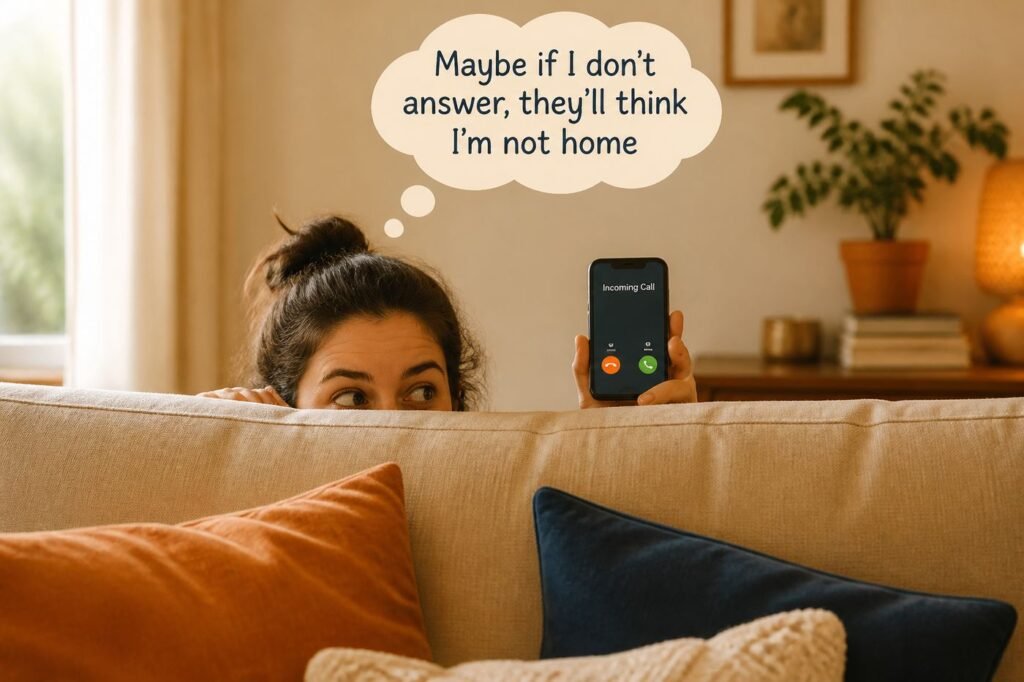
You dread phone calls and prefer texting or email.
You can entertain yourself for hours without feeling bored.
You feel most creative and productive when working alone.
You’re uncomfortable with being the center of attention.
You prefer depth over breadth in nearly everything.
You sometimes feel like people misunderstand or underestimate you.
If most of these sound familiar, there’s a good chance you’re an introvert. But here’s the important part: that’s not a limitation — it’s a different way of experiencing the world.

Common Misconceptions About Introverts
Before we go any further, let’s clear up some things people get wrong.
“Introverts are shy.”
Shyness is about anxiety in social situations. Introversion is about energy in social situations.
You can be a shy extrovert (someone who wants to be social but feels anxious about it) or a confident introvert (someone who can work a room but prefers not to). The two are completely separate traits.
Our article Are You an Introvert or Just Shy? Here’s the Difference explores this distinction in detail.
“Introverts don’t like people.”
This one is particularly frustrating. Introverts don’t dislike people — they just prefer certain kinds of social interaction and usually in smaller doses.
Many introverts deeply value their relationships. They just prefer quality over quantity.
“Introverts are rude or cold.”
Sometimes people mistake an introvert’s quietness for disinterest or aloofness. But an introvert who is quiet in a group setting might be perfectly engaged — they’re just processing internally instead of outwardly.
“Introverts can’t be good leaders.”
Some of the most effective leaders in history have been introverts — think Abraham Lincoln, Rosa Parks, Bill Gates, and Barack Obama. Introverted leaders often excel at listening, thinking strategically, and empowering others.
Introvert vs. Extrovert: The Real Difference
The introvert-extrovert spectrum isn’t really about how “social” you are. It’s about where you get your energy and how much stimulation you can handle.
Energy Source
Introvert: Energy comes from within. Quiet reflection, solitude, and deep focus recharge the battery.
Extrovert: Energy comes from outside. Interaction, activity, and external engagement fuel them.
Processing Style
Introvert: Think first, speak later. They process internally and often need time to formulate their thoughts.
Extrovert: Speak to think. They process externally and often develop their ideas through conversation.
Stimulation Sweet Spot
Introvert: Prefer calm, low-stimulation environments. Too much noise, movement, or interaction overwhelms them.
Extrovert: Thrive on stimulation. They find calm environments boring and crave excitement and activity.
If you want a full breakdown, our article Introvert vs. Extrovert: What’s the Real Difference? goes much deeper.

Why Do Introverts Need So Much Alone Time?
This is one of the most misunderstood aspects of introversion.
When an introvert says they need alone time, it’s not because they’re avoiding you. It’s because their brain genuinely needs to recover.
Imagine you’ve just run a marathon. Afterward, you don’t want to run another marathon. You want to rest, hydrate, and let your muscles recover.
For introverts, socializing is their marathon. Every interaction, even positive ones, demands effort and energy. And just like a runner needs recovery time, an introvert needs quiet time to restore their energy.
There’s also a neurological reason. Introverts have a more active default mode network — the part of the brain that’s active when you’re daydreaming, reflecting, or thinking about yourself. This part of the brain is highly active during alone time. For introverts, this isn’t just “doing nothing.” It’s essential cognitive processing.
Alone time allows introverts to:
Recharge their mental energy
Process their experiences and thoughts
Engage in deep creative work
Maintain emotional balance
Without enough alone time, introverts can become irritable, anxious, and mentally foggy. Not because they’re bad at socializing — because they’re overstimulated.
Learn more about the science behind this in Why Do Introverts Need Alone Time? The Science Behind Your Social Battery .

How Introverts Approach Relationships
If you’re an introvert, you probably don’t have dozens of close friends. But the friendships you do have? They’re often deep, lasting, and meaningful.
Friendships
Introverts tend to form fewer but stronger bonds. They value authenticity and depth, and they invest their limited social energy in people who truly matter to them.
Dating
Dating as an introvert can be challenging — especially in a culture that often equates confidence with extroversion. But introverts bring a lot to relationships: loyalty, deep listening, emotional depth, and genuine presence.
Communication
Introverts often communicate differently. They might:
Prefer writing over talking
Need time to process before responding to a difficult question
Dislike conflict but engage thoughtfully when it arises
Appreciate quiet presence more than constant conversation
Introverts at Work
The workplace is often designed with extroverts in mind — open offices, brainstorming sessions, team-building events, and constant collaboration.
For introverts, this can be exhausting.
But introverts bring unique strengths to work:
Deep focus and concentration
Careful thinking before acting
Strong listening and observation
Written communication skills
Independent problem-solving
The best workplaces recognize that different people work in different ways. Some of the most productive teams include both introverts and extroverts, each playing to their strengths.
If you’re an introvert looking for career ideas, check out The Best Jobs for Introverts: Finding Work That Fits Your Personality .
Small Talk: The Introvert’s Nemesis
“I hate small talk.”
If you’re an introvert, you’ve probably said this — or at least thought it.
Small talk feels exhausting because it lacks substance. It asks introverts to engage in a social ritual without the reward of a meaningful conversation.
Small talk requires:
Constant scanning for appropriate topics
Managing facial expressions and body language
Shifting between superficial topics
Performing social pleasantries
For introverts, who prefer depth and authenticity, small talk feels like a performance without payoff. It’s draining without being fulfilling.
But here’s the thing: many introverts excel at deep conversation. Give them a meaningful topic — something about psychology, philosophy, relationships, or life — and they can talk for hours.
The problem is that a lot of social situations don’t offer that opportunity.
For more on this, read Why Small Talk Feels So Exhausting to Some Introverts .

10 Things Introverts Wish Extroverts Understood
It’s not personal when I need space. I’m not mad at you. My social battery is just drained.
Quiet doesn’t mean disengaged. I’m listening and thinking — I just don’t feel the need to fill every silence.
Please don’t pressure me to be more social. The more you push, the less I want to participate.
Group settings are exhausting, even if I enjoy them. I might leave a gathering early, not because I didn’t have fun, but because I’m out of energy.
I’m not shy. I just choose my words carefully and don’t speak for the sake of speaking.
I don’t need to be “fixed.” My quiet nature isn’t a problem to solve.
Deep conversations matter more to me than chit-chat. If you want to connect with me, go deep.
I might need time alone to process big emotions. It’s not avoidance — it’s how I handle things.
I’m not lonely when I’m alone. I’m actually quite content.
I value our relationship deeply. I just show it differently than extroverts might.
We break down each of these (and more) in 10 Things Introverts Wish Extroverts Understood .
Funny Introvert Problems
Sometimes you have to laugh at the relatable struggles of introvert life.
When someone says “I’m on my way” and you check your phone repeatedly, mentally preparing for the doorbell
Canceling plans and feeling a wave of relief so powerful it’s almost euphoric
That moment when a stranger tries to make conversation and your brain goes blank
Spending all weekend socializing and needing the entire workweek to recover
Overhearing someone say you’re quiet and silently screaming inside
For 25 more moments that only introverts understand, check out Funny Introvert Problems: 25 Moments Only Introverts Will Understand .
How to Thrive as an Introvert
Understanding yourself is the first step. Here’s how to actually make introversion work for you.
1. Honor Your Energy Limits
Stop treating your need for alone time as a weakness. It’s not. Schedule recovery time after social events the way you’d schedule the event itself.
2. Stop Apologizing for Your Personality
You don’t need to explain or justify why you’d rather stay home on a Friday night. You’re not letting anyone down.
3. Choose Quality Over Quantity
Say yes to events and relationships that genuinely matter. Say no to the rest. Your energy is precious.
4. Create an Introvert-Friendly Environment
Whether it’s your workspace or your home, design your environment to match your needs. Quiet corners, comfortable reading spots, and phone-free zones can all help.
5. Play to Your Strengths
Introverts often excel at writing, deep analysis, listening, and creative thinking. Lean into what comes naturally instead of trying to be something you’re not.
How to Support an Introvert You Love
If someone important to you is an introvert, here’s how you can support them:
Respect their need for alone time. Don’t take it personally.
Give them space to process. After a big conversation, give them time to think before expecting a response.
Don’t pressure them to socialize. Invite them, but make it clear that “no” is okay.
Have deep conversations. Give them the meaningful connection they crave.
Ask how they’re doing. Sometimes introverts feel invisible. A genuine check-in means a lot.
The Introvert-Extrovert Spectrum
It’s worth remembering that introversion and extroversion exist on a spectrum. Many people fall somewhere in the middle — a category often called ambiversion.
Ambiverts have traits of both introverts and extroverts. They might:
Enjoy socializing but need alone time to recover
Feel energized by some social situations and drained by others
Adapt their behavior depending on the context
You don’t have to be “100% introvert” to benefit from understanding these traits. Most people have a natural preference, but that preference can shift depending on the situation.
Rirely Humor Moment
A serious explanation, followed by a light observation:
Introverts don’t necessarily hate people. Sometimes they just enjoy people best when those people are approximately six feet away and not making direct eye contact.
Introverts don’t hate phone calls. They just don’t understand why someone would choose a phone call when a text does exactly the same thing but without the auditory equivalent of being waterboarded.
Introverts don’t dread parties. They just spend the entire week leading up to them preparing for the social marathon, and then the entire week after recovering.
Frequently Asked Questions
Is introversion the same as being shy?
No. Shyness is anxiety about social judgment. Introversion is a preference for quieter, less stimulating environments and a tendency to feel drained by social interaction. You can be a confident introvert.
Can an introvert become an extrovert?
Personality traits are relatively stable, but people can learn to adapt. You can develop social skills, but your core preference for how you recharge likely won’t change completely.
Is introversion a disorder?
Absolutely not. Introversion is a normal personality trait. It’s not a condition that needs treatment.
Are introverts more intelligent?
There’s no clear evidence that introverts are more intelligent than extroverts. Introverts may process differently and often prefer solitary intellectual activities, which can create the impression, but intelligence varies widely across all personality types.
Can introverts have good social skills?
Yes. Many introverts have excellent social skills — they just don’t want to use them all the time. Social skills and social preferences are separate things.
How do I know if I’m truly an introvert?
Pay attention to how you feel after socializing. If you consistently feel drained and need alone time to recharge, you’re likely an introvert. If you feel energized and crave more interaction, you’re likely an extrovert.
What percentage of the population are introverts?
Estimates vary, but research suggests introverts make up roughly 25% to 40% of the population, depending on how strictly introversion is defined.
What are the best careers for introverts?
Careers that allow for deep focus, independent work, meaningful engagement, and limited small talk tend to suit introverts. Examples include writing, design, research, software development, counseling, and many trades.
Summary
Introversion is not a flaw. It’s not a weakness. It’s not something to apologize for or fix.
It’s a different way of experiencing the world — one that values depth over breadth, solitude over noise, and meaningful connection over endless interaction.
If you’re an introvert, you process deeply. You connect authentically. You bring thoughtfulness and reflection to everything you do. And yes, you might need to leave the party early sometimes.
That’s not something to hide. It’s something to understand — and to express.
If this guide resonated with you, we have more articles that dig deeper into specific aspects of introversion:
15 Signs You’re an Introvert That Might Feel Surprisingly Familiar — Check your own experiences against these common signs.
Introvert vs. Extrovert: What’s the Real Difference? — A deeper dive into the energy, processing, and communication differences.
Why Do Introverts Need Alone Time? The Science Behind Your Social Battery — The neurology of why solitude is essential.
Are You an Introvert or Just Shy? Here’s the Difference — Understanding the distinction between a preference and anxiety.
Why Small Talk Feels So Exhausting to Some Introverts — Why surface-level conversation drains introverts and what they crave instead.
10 Things Introverts Wish Extroverts Understood — A guide for the extroverts in your life.
Funny Introvert Problems: 25 Moments Only Introverts Will Understand — For when you need to laugh at the relatable struggles.
The Best Jobs for Introverts: Finding Work That Fits Your Personality — Career ideas that play to introverted strengths.
Introvert Gifts: Funny and Thoughtful Ideas for the Introvert in Your Life — Because the introvert in your life deserves to be celebrated.
Express Yourself
If you’ve read this far and thought, “This is definitely me,” why not wear it?
Rirely’s collection includes designs for introverts who know exactly how their social battery works.
Check out our Introvert Collection featuring designs like:
“Social Battery: Low” — Perfect for the introvert who needs to signal they’re recharging.
“Professional Overthinker” — Because sometimes the loudest conversations happen in your head.
“Mentally Somewhere Else” — For the introvert who’s physically present but mentally three books deep.
Each piece is designed to help you express your personality — comfortably and authentically.
Explore More with Rirely
Want more personality insights, relatable observations, and the occasional painfully accurate take?
Join the Rirely newsletter for:
New articles about personality, identity, and self-discovery
Quizzes that help you understand yourself better
Exclusive first looks at new merchandise
The kind of content that makes you say, “That’s so me”
It’s free. It’s not spammy. And it might just help you discover something new about yourself.
Discover yourself. Express yourself.