

You’re sitting at a dinner party with eight people you genuinely like. The conversation is flowing, the food is great, and everyone seems to be having a wonderful time.
But somewhere around the one-hour mark, something shifts.
Your smile starts to feel like it’s on a timer. Your responses become shorter. You catch yourself staring at the door and wondering how long until it’s socially acceptable to leave. You’re not upset. You’re not even bored exactly. You’re just… done.
And later, when you finally get home and collapse onto the couch in blissful silence, you think to yourself: “What is wrong with me? Why can’t I just enjoy things like everyone else?”
The answer, quite possibly, is nothing.
You might just be an introvert.
Here are 15 signs you’re an introvert, they might feel surprisingly familiar.
1. You Feel Drained After Social Events
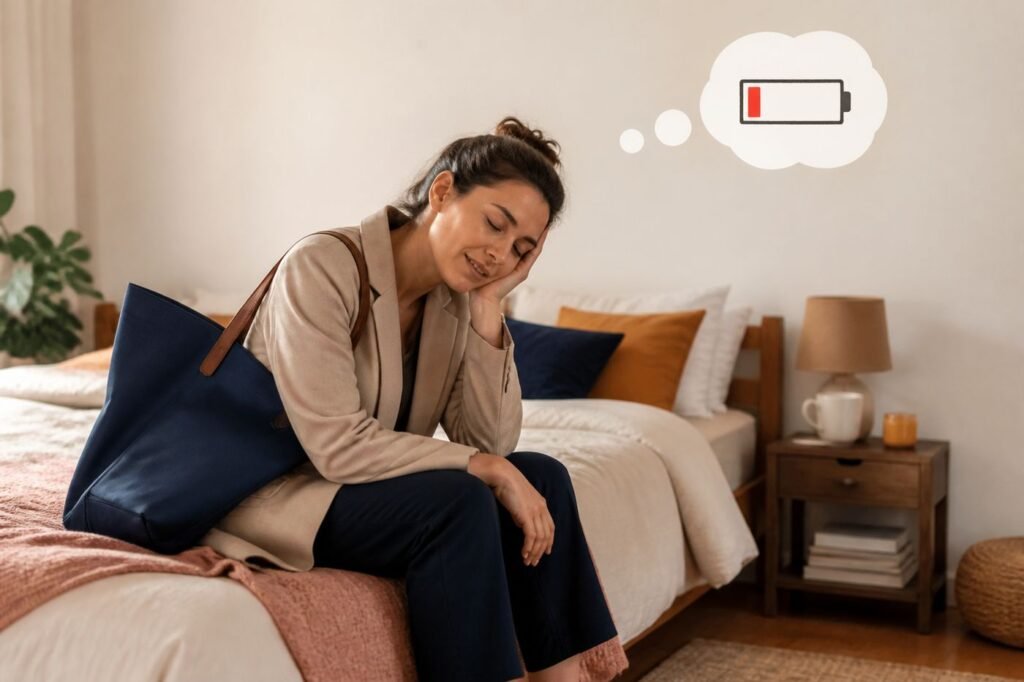
This is the most defining trait of introversion. It doesn’t matter if you had a wonderful time. It doesn’t matter if you genuinely love the people you were with. When you get home, you’re depleted.
The feeling is physical as much as mental. Your brain feels foggy, your patience is thin, and the only thing you want is silence.
This isn’t social anxiety. It’s not that you were uncomfortable. It’s that your social battery is simply empty.
2. You Need Alone Time Like Some People Need Water
If you don’t get regular alone time, you genuinely start to feel unwell. Irritable. Foggy. Disconnected from yourself.
For introverts, solitude isn’t a luxury — it’s a necessity. It’s how you regulate your nervous system, process your thoughts, and reconnect with your own internal world.
When people say “I need some me time,” they might mean an hour or two. When an introvert says it, they might mean an entire weekend.
3. You Think Before You Speak
In group conversations, you’re often the quiet one. Not because you have nothing to say, but because you’re processing.
You formulate your thoughts internally before you share them. You consider what you actually mean, how to phrase it, and whether it’s worth saying at all.
This can make you seem slow to respond or even uninterested. In reality, you’re just being thoughtful.
Extroverts often think by speaking. You think before speaking.
4. You Dislike Small Talk
“How’s the weather?” “What do you do for work?” “Crazy traffic today, huh?”
These conversations feel like pulling teeth.
It’s not that you’re unfriendly. It’s that small talk asks you to engage socially without offering any meaningful substance. You’re putting in energy without getting anything back.
You’d much rather skip the pleasantries and have a real conversation about something that actually matters.

5. You Prefer a Small Circle of Close Friends
You don’t have dozens of friends. You probably don’t even want them.
But the friends you do have? They’re real. You’ve been through things together. You’ve had deep conversations at 2 AM. You show up for each other.
You’d rather have a few genuine connections than a hundred acquaintances who don’t really know you.

6. You Notice Details Others Seem to Miss
Something about the way introverts process information makes them highly observant.
You notice:
The subtle shift in someone’s tone when they’re uncomfortable
The small details in your environment that others overlook
Patterns in behavior that other people don’t register
This can be a superpower — but it can also be exhausting. You see things others don’t, and sometimes you wish you could turn it off.
7. You’re Highly Self-Aware
You spend a lot of time in your own head. Sometimes this leads to overthinking. But it also means you understand yourself in ways other people might not.
You know your triggers. You know your limits. You know what you need to feel balanced.
The downside? You’re also acutely aware of your own flaws, awkward moments, and mistakes. That little voice in your head is a frequent commentator.
8. You Find Loud Environments Exhausting
It’s not just the people. It’s the noise.
Loud restaurants. Crowded bars. Concerts. Any environment where you have to raise your voice to be heard.
These places aren’t just unpleasant — they’re physically draining. Your nervous system is being bombarded with stimulation, and it takes everything you have to stay present.

9. You’re a Good Listener
When someone talks to you, you actually listen. You’re not just waiting for your turn to speak — you’re genuinely taking in what they’re saying.
People often open up to you. They tell you things they haven’t told others. You might not realize it, but there’s a reason for that: you make people feel heard.
The flip side? People often forget that you have things to say too. You might be a great listener, but sometimes you wish someone would listen to you.
10. You Dread Phone Calls
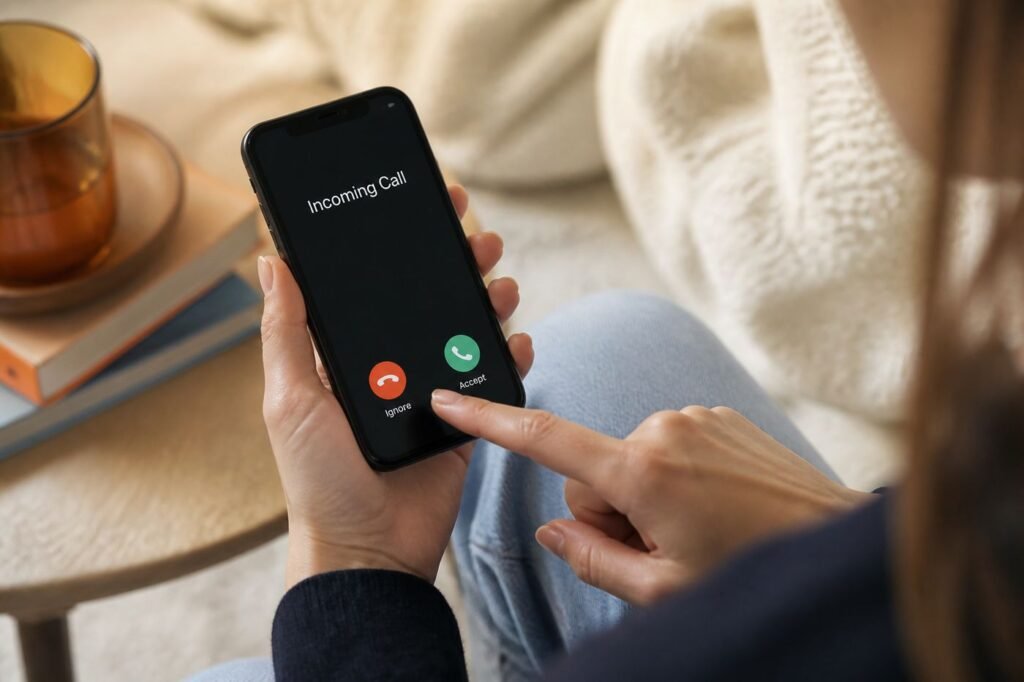
There’s something about an unexpected phone call that feels like a personal violation.
You’d much rather text or email. It gives you time to think, to process, and to respond thoughtfully. A phone call demands an immediate response, and that can feel overwhelming.
If your phone rings and you don’t recognize the number, there’s a good chance you’re letting it go to voicemail.
11. You Can Entertain Yourself for Hours
You don’t get bored easily. In fact, you kind of prefer your own company.
You’ve got books to read, shows to watch, projects to work on, thoughts to explore. You can spend an entire weekend alone and feel perfectly content.
To others, this might seem lonely. To you, it’s comfortable.
12. You Feel Most Creative and Productive Alone
When you’re working on something important, you want to be alone.
Collaboration has its place, but your best ideas come when there’s no one else around. No distractions. No interruptions. Just you and the work.
Open offices are your personal nightmare. The constant chatter, the phone calls, the people walking by — it all breaks your concentration.

13. You’re Uncomfortable Being the Center of Attention
Birthdays. Award ceremonies. Being asked to speak in front of a group.
These moments make you deeply uncomfortable. Not because you lack confidence — but because all those eyes on you feel like a spotlight you never asked for.
You’d much rather celebrate quietly, do your work behind the scenes, and let someone else take the attention.
14. You Prefer Depth Over Breadth
This applies to everything: conversations, relationships, hobbies, even the media you consume.
You don’t want a surface-level understanding of something. You want to go deep. You want to understand the nuance, the complexity, the layers.
When someone gives you a shallow answer, you feel unsatisfied. You want to know why and how and what it actually means.
15. People Sometimes Misunderstand You
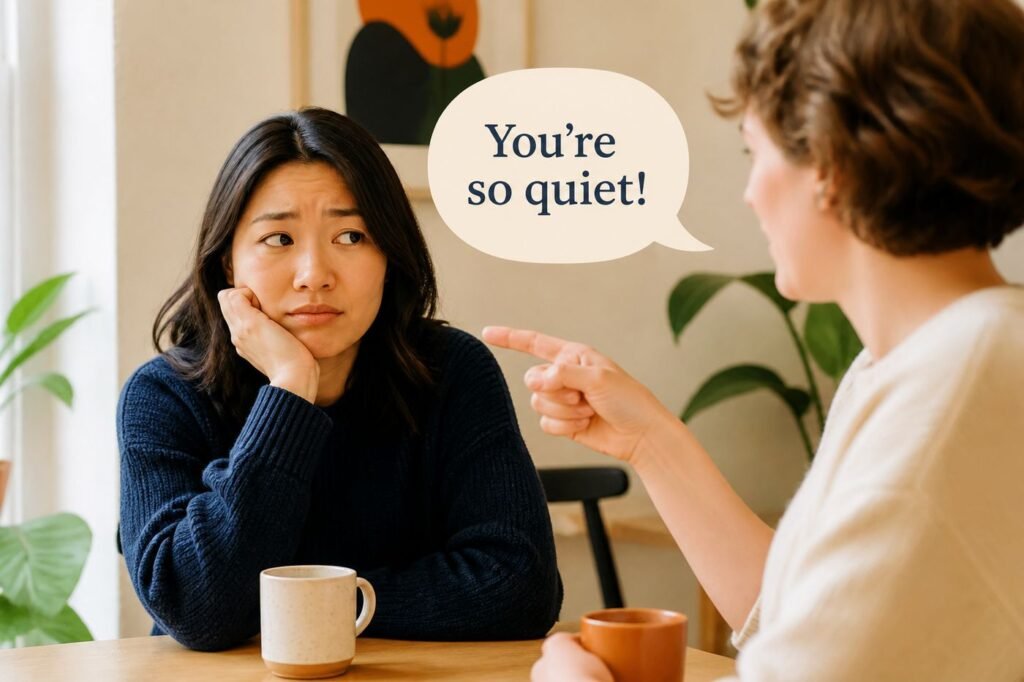
“You’re so quiet.”
“Are you okay?”
“Why don’t you talk more?”
“You should come out of your shell.”
These phrases probably sound painfully familiar.
People often mistake your quietness for sadness, your thoughtfulness for disinterest, your need for alone time for rejection.
You’ve probably spent a lot of your life explaining yourself: “I’m not mad, I’m just quiet” or “I’m fine, I’m just thinking” or “I need to go home and recharge.”
And sometimes, people still don’t get it.
What If You Recognized Yourself in These Signs?
If most of these 15 signs felt familiar, there’s a strong chance you’re an introvert.
And here’s the most important thing to understand about that:
There is nothing wrong with you.
You are not broken. You are not antisocial. You don’t need to be fixed.
You have a different way of processing the world. One that values depth, reflection, and meaningful connection. One that requires solitude to recharge. One that sees details others miss and thinks before it speaks.
Those aren’t weaknesses. They’re strengths — if you understand them.
What These Signs Don’t Mean
It’s just as important to understand what introversion is not.
It doesn’t mean you’re shy.
Shyness is about fear of social judgment. Introversion is about energy. If you’re an introvert but not shy, you can confidently navigate social situations — you just don’t want to do it all the time.
It doesn’t mean you dislike people.
Introverts can deeply love their friends, family, and partners. They just need more recovery time after socializing.
It doesn’t mean you’re depressed.
If you’re introverted, you may enjoy solitude and quiet activities. If you’re depressed, you may isolate and lose interest in things you used to enjoy. They’re different. If you’re concerned about your mental health, please speak to a professional.
It doesn’t mean you can’t be successful.
Introverts thrive in many careers, relationships, and roles. Some of the most successful people in history have been introverts.
Rirely Humor Moment
A quick break from the serious stuff:
You know you’re an introvert when your ideal Friday night involves three things: comfortable pants, a show you’ve already watched six times, and absolutely zero human interaction.
Introverts don’t hate people. They just hate the part of the evening where you have to say goodbye to everyone individually and it takes forty-five minutes.
The most stressful part of any social event is not the event itself. It’s the ten-minute countdown from when you decide to leave to when you actually manage to escape.
Frequently Asked Questions
How many of these signs do I need to relate to in order to be an introvert?
There’s no strict threshold. If most of them feel familiar and you consistently feel drained by social interaction, you’re likely an introvert. Personality exists on a spectrum.
Can I be an introvert if I enjoy socializing sometimes?
Absolutely. Introversion doesn’t mean you hate socializing. It means it costs you energy. You can genuinely enjoy a party and still need a full day to recover afterward.
What if I relate to some extrovert signs too?
That’s normal. Many people are ambiverts — somewhere in the middle. You might enjoy socializing in some contexts but need solitude in others. Human personality is more complex than a simple binary.
Can I change my introversion?
You can develop social skills and adapt to different situations, but your core preference for how you recharge is unlikely to change completely. And that’s okay — you don’t need to change.
Is introversion becoming more common?
It’s not necessarily that introversion is increasing, but there’s growing awareness and acceptance of it. More people are recognizing themselves as introverts because the term is better understood.
What if I’m an introvert in a family of extroverts?
That can be challenging. It’s important to communicate your needs clearly — not as an apology, but as a fact. “I love you, and I need some quiet time to recharge” can go a long way.
Summary
Introversion isn’t a diagnosis or a deficiency. It’s a personality trait with specific characteristics:
Social interaction drains energy instead of creating it
Solitude is essential for recharging
Thinking happens internally before speaking
Depth is preferred over breadth in relationships and conversations
Quiet environments feel more comfortable than loud ones
If you recognized yourself in these signs, you’re in good company. Millions of people experience the world the same way you do.
The key is not to fight it or apologize for it. The key is to understand it — and build a life that honors your natural tendencies.
You’re not quiet because you have nothing to say. You’re quiet because you’re thinking. You’re not antisocial because you need alone time. You’re self-aware. You’re not broken because you’re different. You’re just an introvert.
And that’s a pretty wonderful thing to be.
If this article resonated with you, dive deeper into the introvert experience:
The Complete Guide to Introverts — The foundation for understanding how introverts think, recharge, and connect.
Introvert vs. Extrovert: What’s the Real Difference? — A detailed breakdown of the two personality types.
Are You an Introvert or Just Shy? Here’s the Difference — Understanding the crucial distinction between personality and anxiety.
Why Do Introverts Need Alone Time? The Science Behind Your Social Battery — The neurology behind the introvert’s need for solitude.
10 Things Introverts Wish Extroverts Understood — A guide to help the extroverts in your life get it.
Funny Introvert Problems: 25 Moments Only Introverts Will Understand — Because sometimes you just need to laugh.
Express Yourself
If you read these signs and thought, “This is literally me,” why not wear it?
Rirely’s Introvert Collection celebrates the quiet, observant, deeply-thinking people who make the world richer.
Check out our designs, including:
“Social Battery: Low” — The shirt that says what you can’t always vocalize.
“Professional Overthinker” — Because some people have a voice in their head 24/7.
“Mentally Somewhere Else” — For the introvert who’s present but processing.
Each design is a celebration of who you are — quiet and all.
Explore More with Rirely
Want more personality insights, relatable observations, and the occasional painfully accurate take?
Join the Rirely newsletter. It’s free. It’s not spammy. And it might just help you discover something new about yourself.
Discover yourself. Express yourself.